by CloudStation
02/08/2024
Publishedpublic
Uptime Kuma
Deploy this template to create your own app and start your journey with CloudStation.
8 deployments
02/08/2024
by CloudStation
02/08/2024
Deploy this template to create your own app and start your journey with CloudStation.
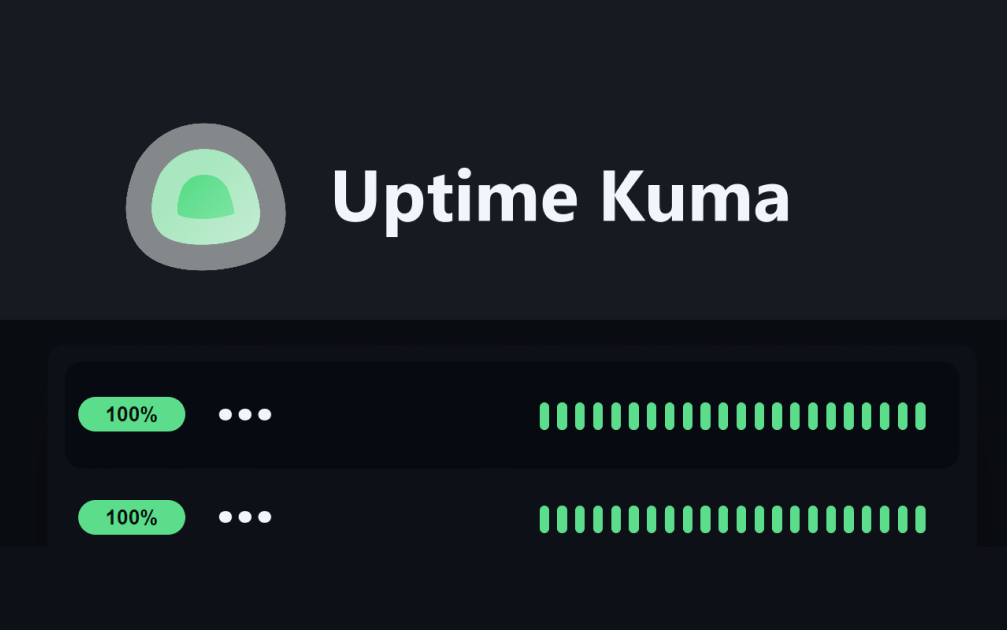
What is Uptime Kuma? Uptime Kuma is an easy-to-use self-hosted monitoring tool for checking whether websites, APIs, ports, DNS records, containers, and other services are up. It combines uptime checks, alerts, charts, and status pages in one lightweight dashboard, making it a popular open-source alternative to hosted uptime monitoring tools.
Deploy Uptime Kuma on CloudStation when you want practical uptime monitoring and status pages without setting up a VPS, reverse proxy, SSL, storage volumes, or routine hosting work yourself. It is a strong fit for teams that want simpler service visibility than a full observability platform.
Best for: founders, developers, agencies, and small operations teams that need website monitoring, API alerts, Docker container checks, and public or internal status pages.
Not best for: teams that need deep infrastructure metrics, logs, tracing, and full-scale observability. In that case, a broader monitoring stack is a better fit.
Monitor HTTP, HTTPS, TCP, ping, DNS, WebSocket, keyword, JSON-query, push, and Docker-container checks
Watch websites, APIs, client projects, internal tools, and background services from one dashboard
Start with uptime visibility before investing in a larger monitoring stack
Send downtime notifications to the people who need to know fast
Use alerting to reduce silent failures and speed up response time
Keep monitoring lightweight enough for small teams to actually maintain
Create status pages so customers, clients, or internal teams can see service health clearly
Map status pages to specific domains and group related services
Reduce repeated "is it down?" questions with a page people can check themselves
Run uptime monitoring on infrastructure you control
Keep persistent monitoring data in a managed CloudStation deployment
Use a custom domain and SSL without manually building the hosting layer
Uptime Kuma vs UptimeRobot: Choose Uptime Kuma when you want a self-hosted uptime monitoring tool and status pages on infrastructure you control.
Uptime Kuma vs Better Stack or Pingdom: Choose Uptime Kuma for straightforward uptime checks and status visibility. Choose a broader incident platform when you need more than uptime monitoring.
Uptime Kuma vs Prometheus: Choose Uptime Kuma for easy availability monitoring. Choose Prometheus when you need deep metrics collection and infrastructure observability.
Skip the VPS setup: CloudStation gives you a faster route than manually hosting Uptime Kuma with Docker, a reverse proxy, SSL, and persistent storage.
Strong Basic-plan fit: Uptime Kuma is usually a straightforward single-app deployment, which makes CloudStation Basic a natural starting point.
Good for always-on utility apps: Run a monitoring URL your team can keep separate from the apps it watches.
🚀 CloudStation Basic Plan: $17.99/month total
✓ 1 app deployment
✓ 10GB storage
✓ 1 vCPU and 2GB RAM per app
✓ Custom domains
✓ Free SSL
✓ Docker support
✓ Automatic backups
Best fit: Use Basic for a standard single-app Uptime Kuma deployment. It gives small teams a predictable path to self-hosted uptime monitoring without another usage-based SaaS bill.
Website uptime monitoring: Watch customer-facing sites, landing pages, and storefronts.
API monitoring alerts: Track health endpoints and internal APIs that support your product.
Open-source UptimeRobot alternative: Replace hosted per-monitor pricing with a self-hosted dashboard.
Status page hosting: Publish internal or public service health updates from one tool.
Is Uptime Kuma free and open source?
It is an open-source self-hosted monitoring tool. Hosting it on CloudStation adds managed deployment convenience.
What can Uptime Kuma monitor?
According to its GitHub README, it supports checks for HTTP(s), TCP, keyword, JSON query, WebSocket, ping, DNS record, push, Steam game server, and Docker containers.
Does Uptime Kuma include status pages?
Yes. Status pages are one of its core features.
Is Uptime Kuma a full observability platform?
No. It is excellent for uptime checks, alerts, and status pages, but it is not a replacement for a full logs-metrics-tracing stack.
If you are searching for self-host Uptime Kuma, Uptime Kuma hosting, open-source UptimeRobot alternative, or deploy Uptime Kuma without managing servers, this CloudStation template is built for that intent. Launch Uptime Kuma, add your checks, configure alerts, and give your team a status page they can trust.
Deploy Uptime Kuma Now → Uptime checks. Alerts. Status pages. Less infrastructure work.
Uptime Kuma on CloudStation: self-hosted uptime monitoring for teams that want clear alerts and status pages without running the hosting stack by hand.